01
Safer for every visitor
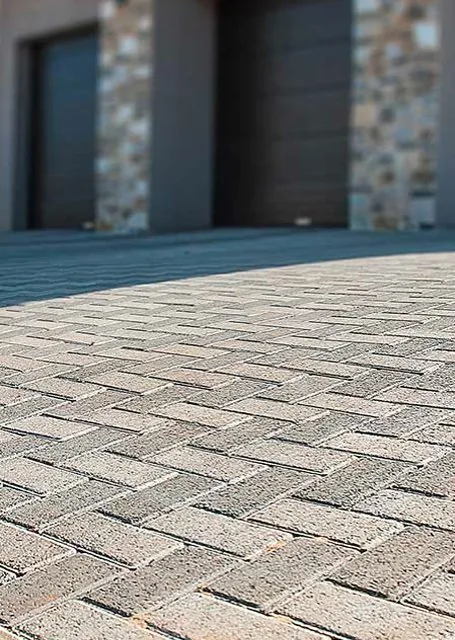
An even, slip-resistant surface cuts trip and slip risk for staff, shoppers, tenants and wheelchair users alike.
Home/Services/Commercial walkways
Walkway & pedestrian paving
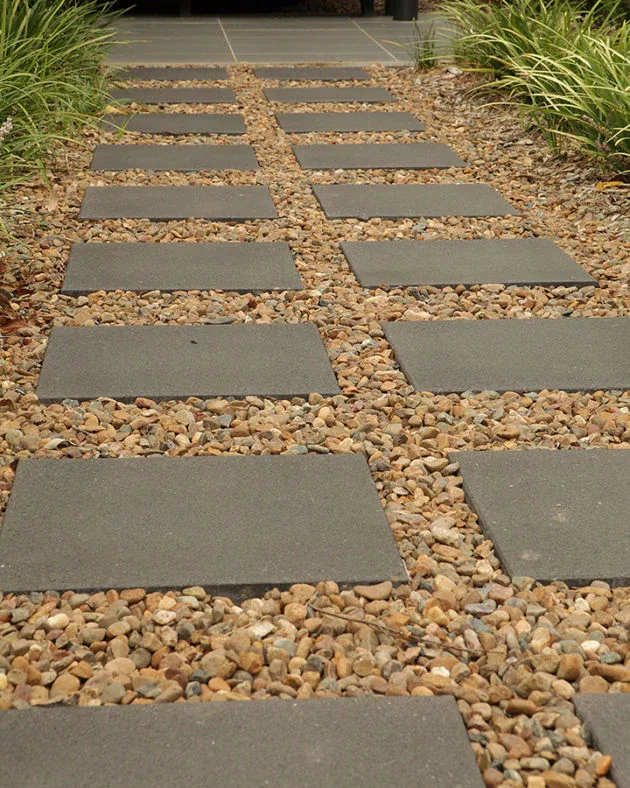
The routes your staff, customers, tenants and visitors use every day deserve the same care as the entrance they drove in on. We pave pedestrian walkways, courtyards and connecting paths across offices, retail centres and estates — level and even underfoot, slip-resistant in the rain, and built on a base that won't rut or heave under years of daily footfall.
Accessible, even surfacesNo trip lips — wheelchair and trolley friendly
Slip-resistant & drainedTextured large-format pavers laid to a fall
Built for daily footfallA base that carries years of foot and trolley traffic
Overview
Before a single car parks, people are already walking your site — staff arriving before opening, couriers cutting between buildings, shoppers moving from the parking deck to the mall entrance, a wheelchair user rolling from the accessible bay to reception. That pedestrian route carries more individual trips in a day than your driveway ever will, and it has to work for every one of them: young, old, in heels, on crutches, pushing a trolley or a pram.
Commercial walkway paving is where commercial paving gets personal — this is the surface people actually touch, not just drive over. We lay it level and even, in a large-format paver that keeps joints tight and sightlines clean, and we finish it with a texture that still grips when the Highveld rain comes down. Where your parking areas hand over to foot traffic, we make sure the transition is flush and obvious, not a kerb someone catches a toe on.
We build in drainage and wayfinding from the start rather than bolting them on afterwards, and where a courtyard or covered walk needs it we'll talk you through permeable paving so water soaks away instead of sheeting across the route. It's the same attention we bring to a home's garden path, scaled up for the traffic a commercial site sees every day.
In detail
Four things decide whether a pedestrian route stays safe and level for years: the base, the paver, the finish and the fall.
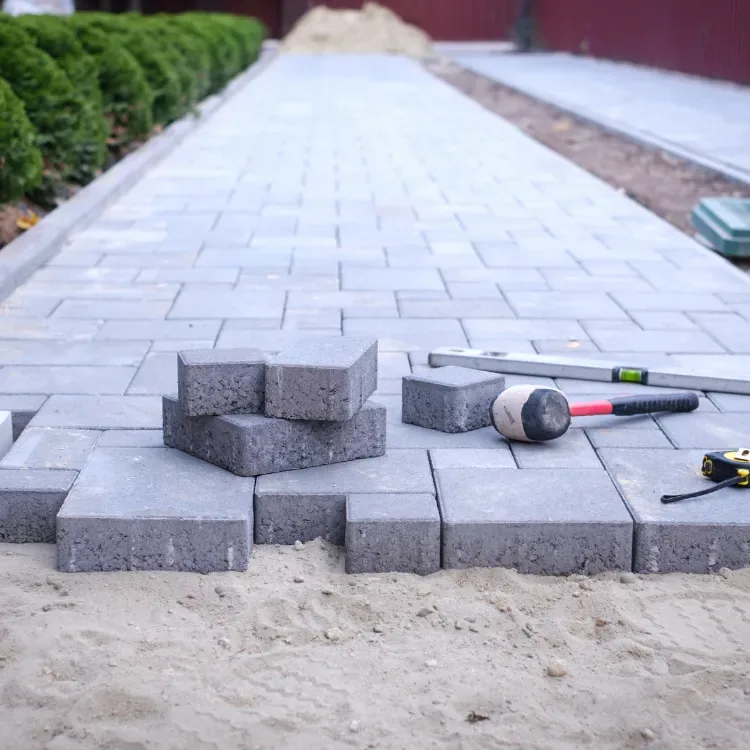
Unlike a driveway, a walkway doesn't need to carry a car — but it does need to stay dead flat, because a lipped or rocking paver is the single biggest cause of a pedestrian slip-and-fall claim. We excavate to firm ground, build up a compacted base in layers, then screed the bedding layer so every paver sits flush. Thresholds, ramps and kerb cuts are set level with the paving either side, with no proud edge for a wheel or a foot to catch on.
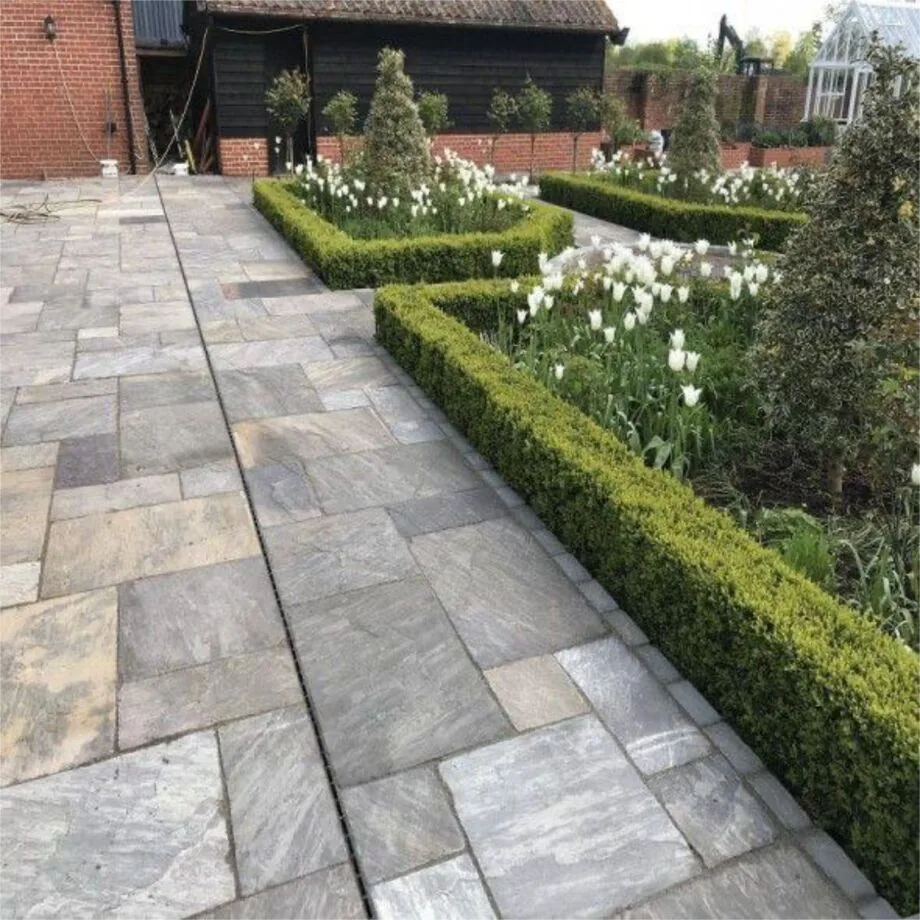
A large-format concrete or clay paver crosses more ground with fewer joints, which means fewer trip points and a cleaner sightline down the route. It also gives us a clean surface to work wayfinding into — a contrasting border or a different paver colour can mark a crossing, an accessible route or the edge of a driveway without relying on paint that wears off in a season. Around planters, columns and tight corners we'll often switch to a smaller brick or interlocking format, which cuts in and curves far more cleanly than a slab.
We specify a textured or riven finish for pedestrian routes, not a smooth or polished one. It matters most at entrances, ramps and any covered walkway where blown-in rain or a dripping trolley catches people off guard. A glass-smooth paver has its place on a dry, decorative patio — we keep it away from anywhere staff and customers actually walk.
Every route is laid to a fall subtle enough to walk and wheel across comfortably, but deliberate enough to send rainwater to a bed, channel or catchpit instead of letting it sit. Where a courtyard is enclosed, we design in proper drainage rather than hoping it copes. Underneath it all sits a base built for the load a walkway actually gets — years of foot and trolley traffic, plus the odd delivery vehicle nudging the edge — so it doesn't rut, dish or heave the way an under-built surface will.
| Route | Recommended paver | Typical thickness | Finish |
|---|---|---|---|
| Office & retail walkways | Large-format concrete / clay | 50–60 mm | Textured, tight joints |
| Entrances, ramps & thresholds | Large-format / brick | 50–60 mm | Fine-textured, slip-resistant |
| Courtyards & plazas | Large-format or cobble mix | 60 mm | Herringbone or contrast band |
| Estate & complex walkways | Interlocking / brick | 50 mm | Stretcher or herringbone |
Guidance only. We confirm the right spec on site, based on foot traffic, weather exposure and accessibility needs.
Benefits
Safe for every visitor, easy to maintain, and built to look the part for years.
01
An even, slip-resistant surface cuts trip and slip risk for staff, shoppers, tenants and wheelchair users alike.
02
Crisp, large-format walkways read as well-run and modern the moment someone steps out of their car.
03
A properly built base absorbs years of foot and trolley traffic without cracking the way a poured slab does.
04
Falls and drainage designed in from the start keep the route usable straight through a Highveld storm.
05
Damaged or stained paving is repaired section by section, not jack-hammered and re-poured.
06
Phased and after-hours work keeps the walkway open to staff and customers while we go.
What's included
Assess, build, lay, finish and clean up — all in the fixed quote, nothing added later.
Free site assessment & written quoteWe walk the routes and price it firm
Excavation & compacted baseBuilt up in layers to firm ground
Falls & edge restraintsSo the surface stays flat, drained and locked tight
Supply & laying of slip-resistant paversLarge-format, cut in cleanly at every edge
Flush thresholds & wayfinding detailWhere accessibility or route-marking is needed
Compaction, jointing sand & clean-upVibrated in, sanded and the site handed back tidy
Why us for this
A cracked driveway is obvious. A walkway that's a few millimetres out of level, or a fall that's a fraction too steep, looks fine on handover day and turns into an incident report eighteen months later. That's the part a facilities manager can't check by eye, and it's exactly where we spend the most care.
Our own teams lay these routes across Gauteng's business nodes — from office parks in Sandton to retail centres, estates and body corporates further afield. One crew quotes the job, lays it and stands behind it, so there's a single number to call if anything ever needs attention.
Compacted, screeded baseNo rocking pavers, no dishing over time
Accessible fallsEnough to drain, gentle enough to walk and wheel
Slip-resistant paversTextured finish chosen for the exposure
Our own teamsGuaranteed in writing, not a subcontractor
Our process
Planned around your tenants and trading hours, with a programme agreed before we start.
01
We walk the routes, check falls, entrances and existing surfaces, and hand you a fixed written price.
02
Dig out to firm ground, then lay and compact the base in layers, phased around tenants where needed.
03
Falls set for drainage, edge restraints fitted, and any contrast bands or route-marking detail worked in.
04
Pavers laid tight to pattern, jointing sand swept in, and the route handed back clean and open.
The walkway between our parking deck and the mall entrance turned into a skating rink every time it rained. Rapid Paving relaid it with a textured large-format paver and proper falls, and we haven't had a single slip complaint since.
FAQs
Accessibility, grip, pavers, drainage and upkeep — what facilities managers ask us first.
Send a photo or a site plan on WhatsApp and we'll often give you a ballpark before we visit.
WhatsApp a photoYes — that's the standard we build every commercial walkway to, whether or not the site has a formal accessibility requirement. We keep the surface level and flush at thresholds and kerb cuts, avoid raised lips between panels, and set cross-falls gentle enough to drain without becoming hard work to cross in a wheelchair or with a pram or trolley.
Not if it's specified correctly. We use a textured or riven large-format paver on pedestrian routes rather than a smooth or polished finish, and we pay particular attention to entrances, ramps and any covered walkway where rain blows in. A glass-smooth paver has its place, but not on a route people walk in the rain.
It depends on the shape of the route. Large-format pavers give fewer joints, a cleaner sightline and a more modern look, and they suit straight runs, plazas and courtyards well. Brick or interlocking pavers handle curves, steps and tight corners more easily, and they're often the better choice around planters, columns and odd-shaped courtyards. Many sites end up using both, and we'll recommend the mix at the site visit.
We lay every route to a deliberate fall so rainwater runs off to a bed, channel or catchpit rather than sitting on the surface. Where a courtyard or covered walkway can't drain to a natural fall, we can design in a permeable paver so water soaks straight through the joints instead of running off at all.
Very little. An occasional sweep or hose-down and a top-up of jointing sand every couple of years keeps the joints full and the route weed-free. Where a section settles from tree roots or a service trench, we lift and re-lay just that part — you're never looking at resurfacing the whole walkway.
As a guide, supplied and laid walkway paving runs from about R220 per m² and moves up with the paver grade, the base preparation and any wayfinding or accessibility detailing. Every site's foot traffic and layout differs, so we confirm a fixed, itemised price at the free site visit.
Related services
Next step
Twenty minutes on site is enough for us to check the routes, the falls and the access, and put a fixed price in writing.
Free site visits · Fixed written quotes · Commercial walkway paving across Johannesburg and the wider Gauteng
Contact
Tell us your suburb and what you'd like paved. We'll arrange a free site visit and a fixed written quote — no obligation.